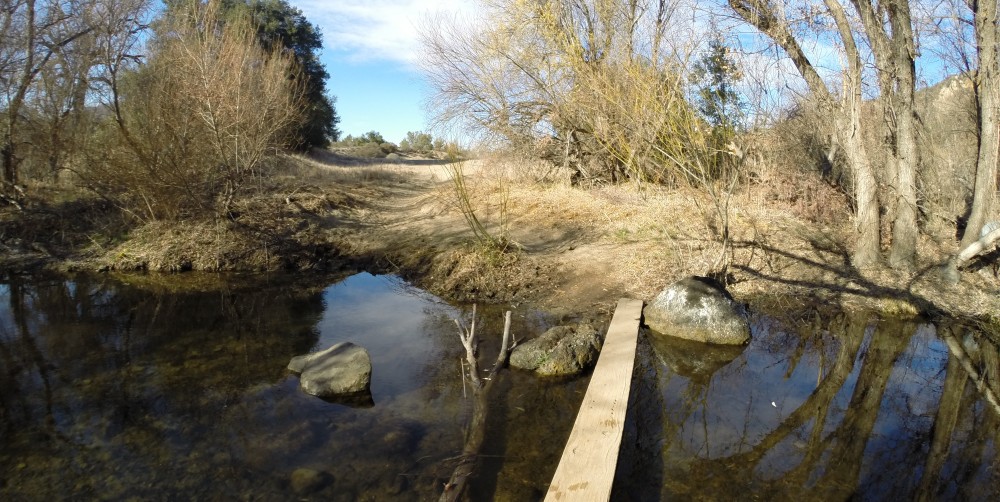
A big part of nature’s majesty lies in its sounds. The soft trickle of water, rolling thunder, the smooth hoot of an owl. There are no filters here, no editors. Everyone gets to integrate the pleasure. My experience with scientific journals and academic papers, and often academics themselves, is not the same.
I believe science can be a universal language.When spoken properly, and with an accent absent of hierarchy, anyone can understand it. I was reminded of this potential last week while talking with Dr. Claudio Gratton from the University of Wisconsin at Madison. Our half hour conversation focused primarily on me introducing him to my research in Australia. Dr. Gratton adroitly linked my focus with a few of his recent studies. This connection lead our conversation in directions less scientifically rigid. Specifically, we started talking about how best to emphasize the value of conservation efforts to those who are often most affected; those people who make a living on and of the land; those who are not scientists. And it was here that I was engulfed in the power of the natural audio experience I have been lucky enough to hear.
Birds, insects, marine vertebrates…well most every animal except humans, throw communication to who ever may be listening. It is how I know I am REALLY in Australia (the birds in the morning), it is the framework for the memory of a night of camping in which I heard coyotes and owls dueling for acoustic space, and it is the portal though which we know we are not alone. And it was on this particular day, talking to a research biologist at the height of his career, with both of us concerned about those outside of our immediate audience, that my belief in science and ecology, further solidified. So here is the challenge; over the course of the next week, speak to someone outside of your normal audience. Tell them about what you do and what your passions are. Embrace your challenge of learning a new language. And celebrate the expansion of your community.
 eco.log.y
I love your writing. I love how it provides a space to think, contemplate, formulate and expand. I love how you gently and firmly challenge us to be more complete, more whole, more connected.
An interesting perspective on science communication, Jeff. Because of my role in science, I’m one of the “coyotes” who is challenged often and repeatedly to communicate about my science. It’s usually rewarding, but often only for a short time before attention shifts elsewhere (e.g. who is Jennifer Aniston dating, and did you see the latest episode of Homeland?). My question to you is, how do we communicate more effectively?
(P.S. Love your work, please come back to Oz!)
Hello Beth. A very late reply. I apologize. To be honest, I was having a difficult time coming up with a solid answer to your question. In the end the best I think I can offer is that we, as scientists, and other experts for that matter, need to embrace the idea that people, outside our small audiences, want to know and learn about the world around them. Our challenge is to find a mutual language that allows us to bridge the communication gap. The starting point needs to be the mutual desire to pursue this new language.